01
Checkout level action
When a rule matches a risky buyer, the goal is to stop the order before payment instead of cleaning up the damage later.
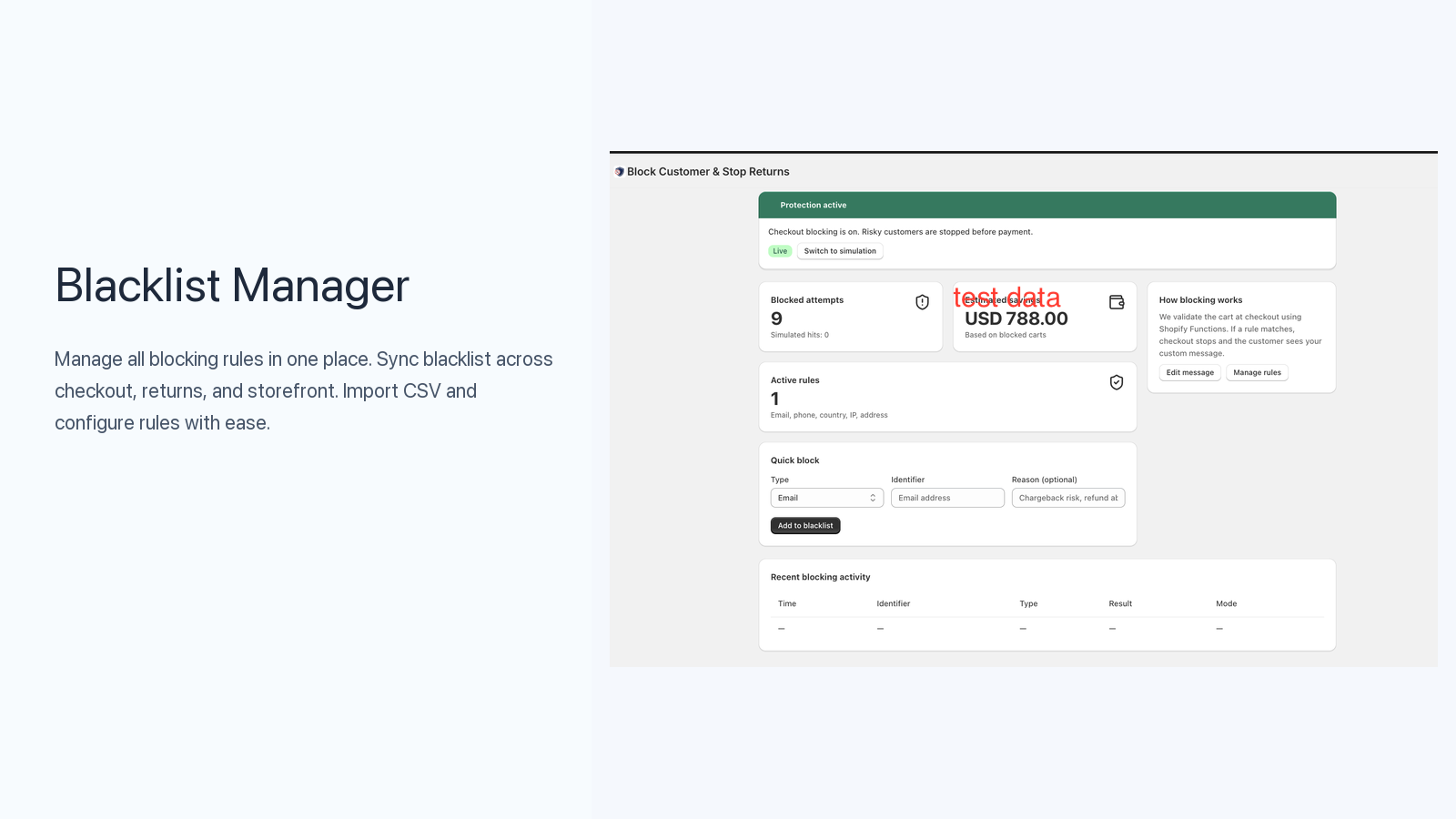
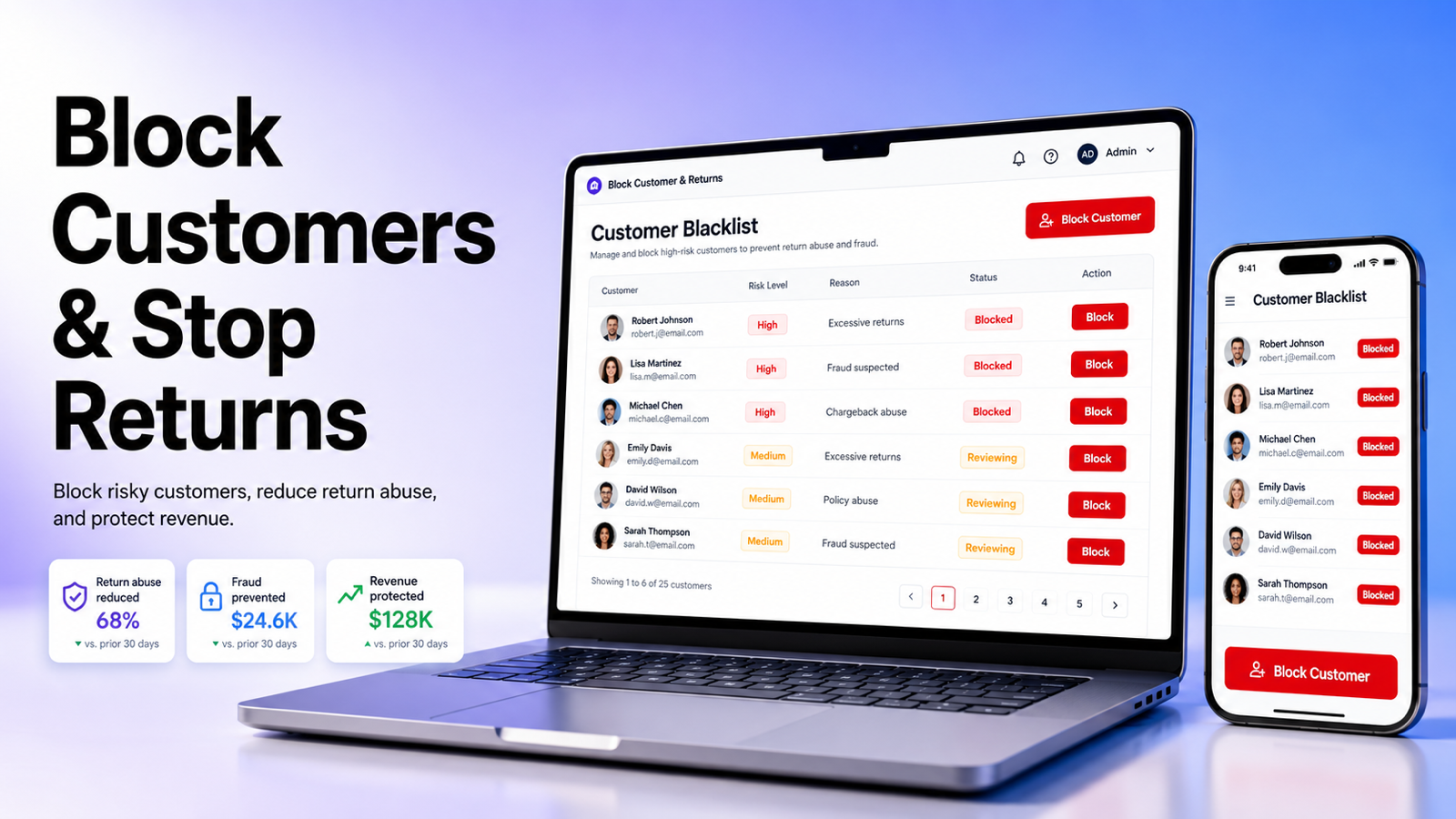
Turn known fraud, repeat return abuse, fake orders, and risky buyer signals into checkout rules your team can review.
Live rule desk
Known repeat-risk gate
Paste a real risk pattern. The simulator suggests the narrowest blocking signal, previews the checkout decision, and then sends merchants to the Shopify app to build the rule.
Workspace
Simulated rule
Signal
phone + address + IP
Action
Block
Timing
Before payment
SIMULATION RESULT
The simulated buyer reaches checkout, matches the rule, and cannot complete payment.
Chargeback history should be documented with order and support evidence.
Built for merchants who need practical ways to block bad customers, prevent repeat fraud, and protect checkout on Shopify.
01
When a rule matches a risky buyer, the goal is to stop the order before payment instead of cleaning up the damage later.
02
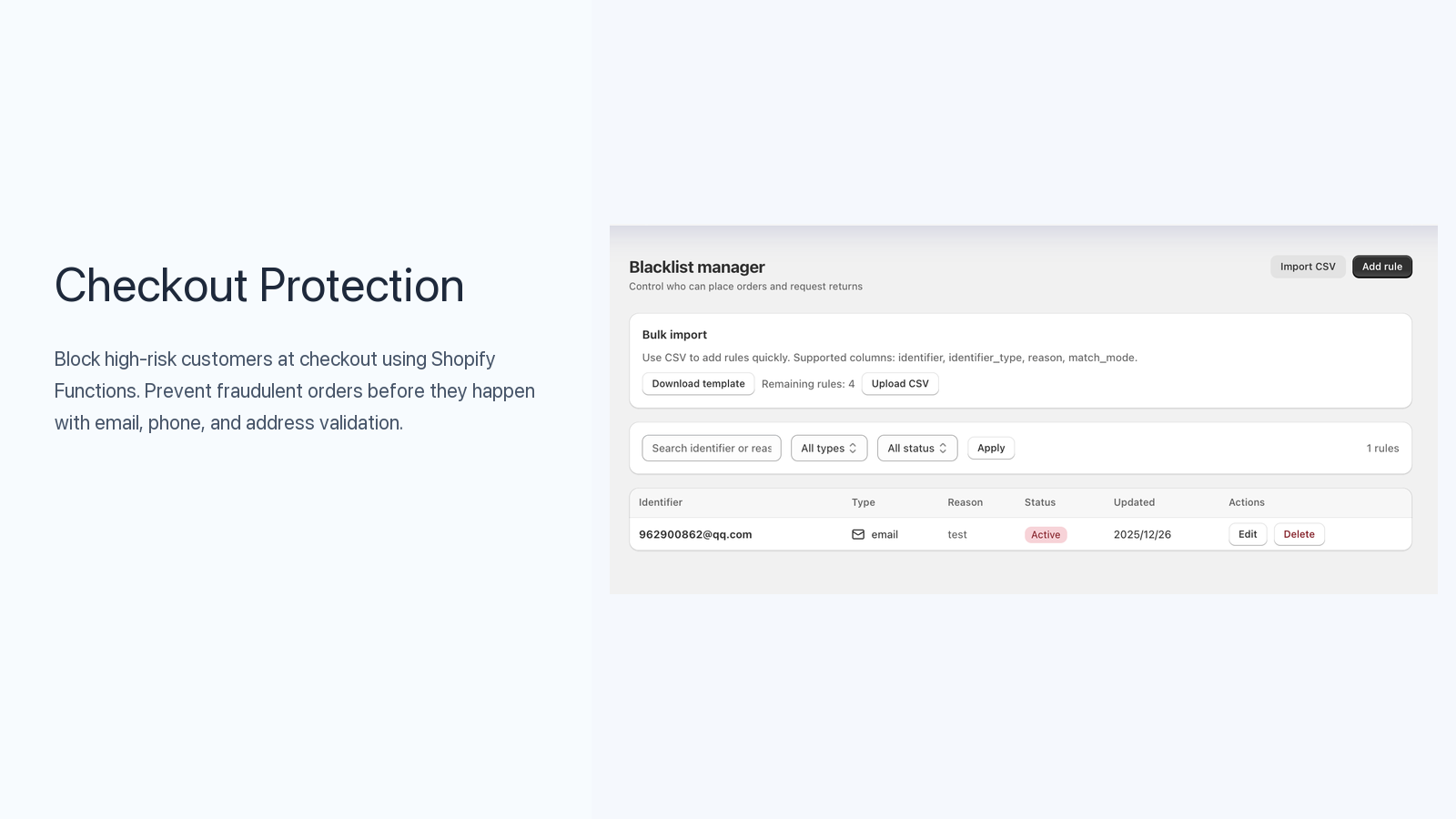
Use customer details such as email, phone, name, address, country, and IP when the risk pattern is clear.
A block list should be reviewable. Keep a short reason for fraud, chargeback, return abuse, spam order, or store policy risk.
Country and IP rules should be tied to shipping limits, compliance, or confirmed fraud patterns, not discriminatory targeting.
The workflow helps store teams move from a messy support note to a clear rule, test, and review process.
A clean risk workflow helps the team protect checkout without turning the block list into a messy spreadsheet.
Use buyer details your team can verify, such as email, phone, address, name, country, or IP.
Move repeated fraud, fake orders, chargebacks, and return abuse into checkout rules when the pattern is clear.
Keep a short reason for each rule, use allow rules for trusted exceptions, and clean up stale blocks.
Rule coverage
MappedUse separate rule paths for customer blocking, checkout rules, fake orders, chargebacks, country rules, IP rules, and app comparisons when your team needs them.
Short answers about customer blocking, checkout rules, and repeat risk control.
It sends merchants to the Block Customer & Stop Returns listing on the Shopify App Store.
No. Start with the most specific buyer signal you can verify, then use country or IP rules only when the business reason is clear.
No. Use it as a blocking layer for known repeat risk while keeping normal fraud review for new or unclear orders.
Yes. Country rules should be framed around shipping, compliance, and confirmed fraud patterns, not nationality or protected groups.
Install Block Customer & Stop Returns and turn known buyer risk into clear checkout rules your team can review.