CHECK 1
Confirm the rule reason
A free checkout rules app shopify search often starts after one painful order. Before creating a shopify prevent checkout rule, confirm the email, phone, address, country, or IP pattern.
Shopify prevent checkout needs usually come from a very clear problem: the store can identify a risky buyer, but the buyer can still reach checkout. Checkout blocking changes that moment by matching an active rule before the order is paid.
Merchant need
Catching abuse after payment still leaves work for support, fulfillment, and finance. If the buyer is already known, the cleaner workflow is to stop the checkout and save the team from another cleanup job.
Block before payment when the rule matches.
Use allow rules for trusted exceptions.
Keep logs so the team can explain what happened.
Use shopify prevent checkout rules when the buyer signal is already known. A shopify prevent checkout workflow should be precise enough to protect the store without turning checkout into a blunt filter.
CHECK 1
A free checkout rules app shopify search often starts after one painful order. Before creating a shopify prevent checkout rule, confirm the email, phone, address, country, or IP pattern.
CHECK 2
A shopify payment blocker extension can sound broad, but the better goal is focused control. Shopify prevent checkout rules should stop known risk before payment, not punish normal buyers.
CHECK 3
Checkout validation rules work best with a short reason and a test case. A shopify prevent checkout setup should include logs, allow rules, and a review habit after launch.
CHECK 4
Start with a narrow shopify prevent checkout rule, then expand only when the evidence supports it. This keeps the experience fair and easier for support to explain.
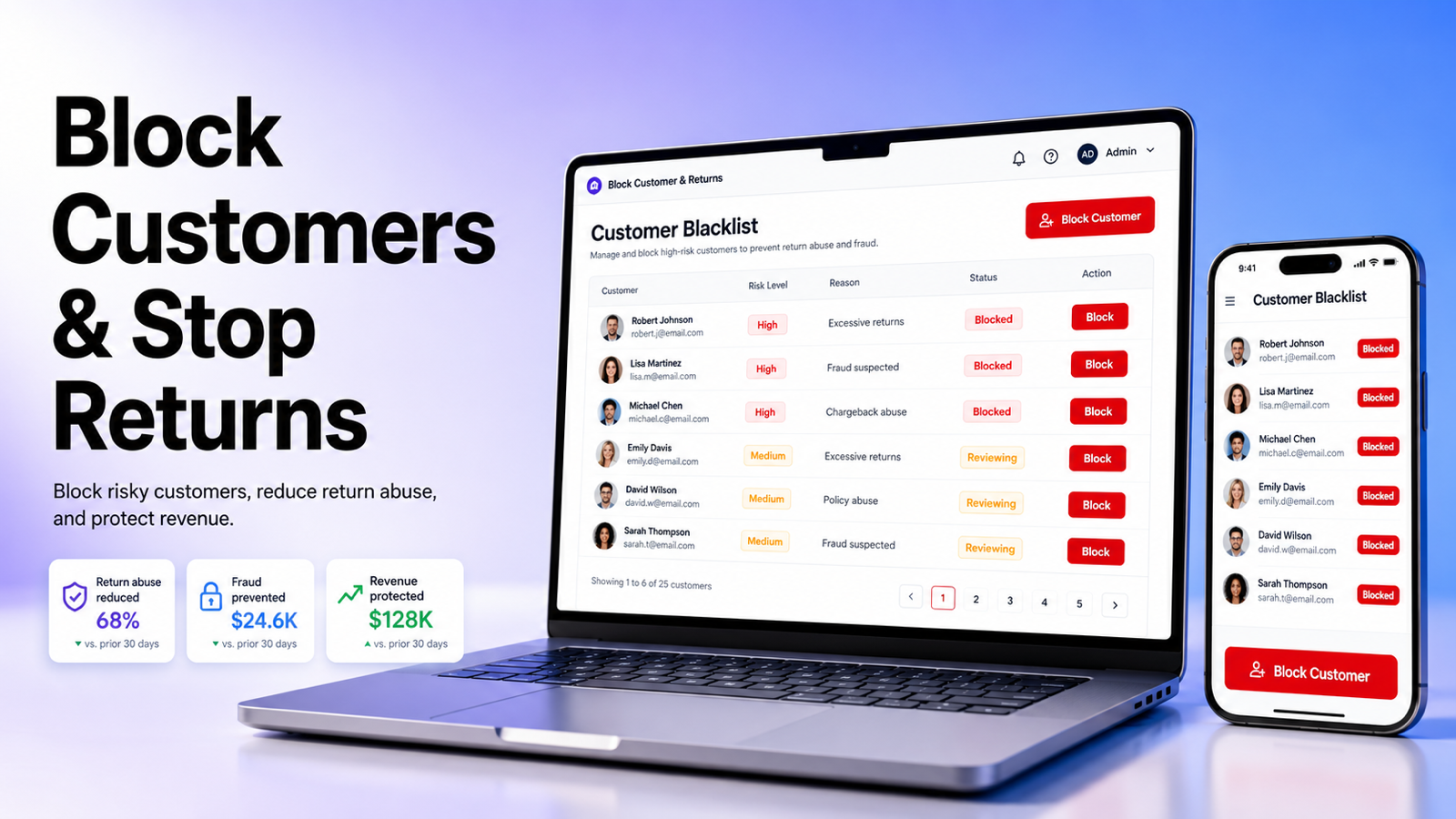
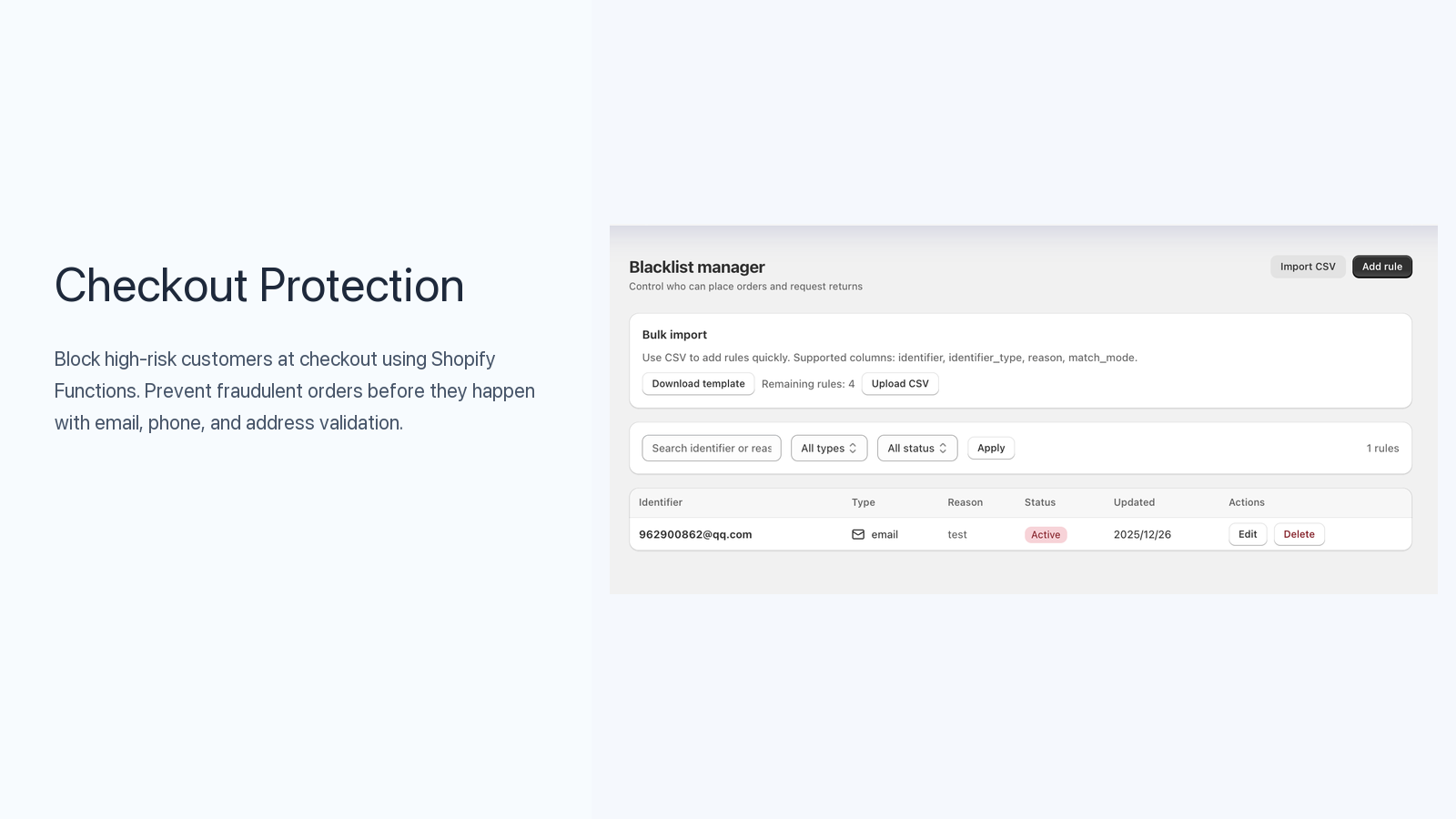
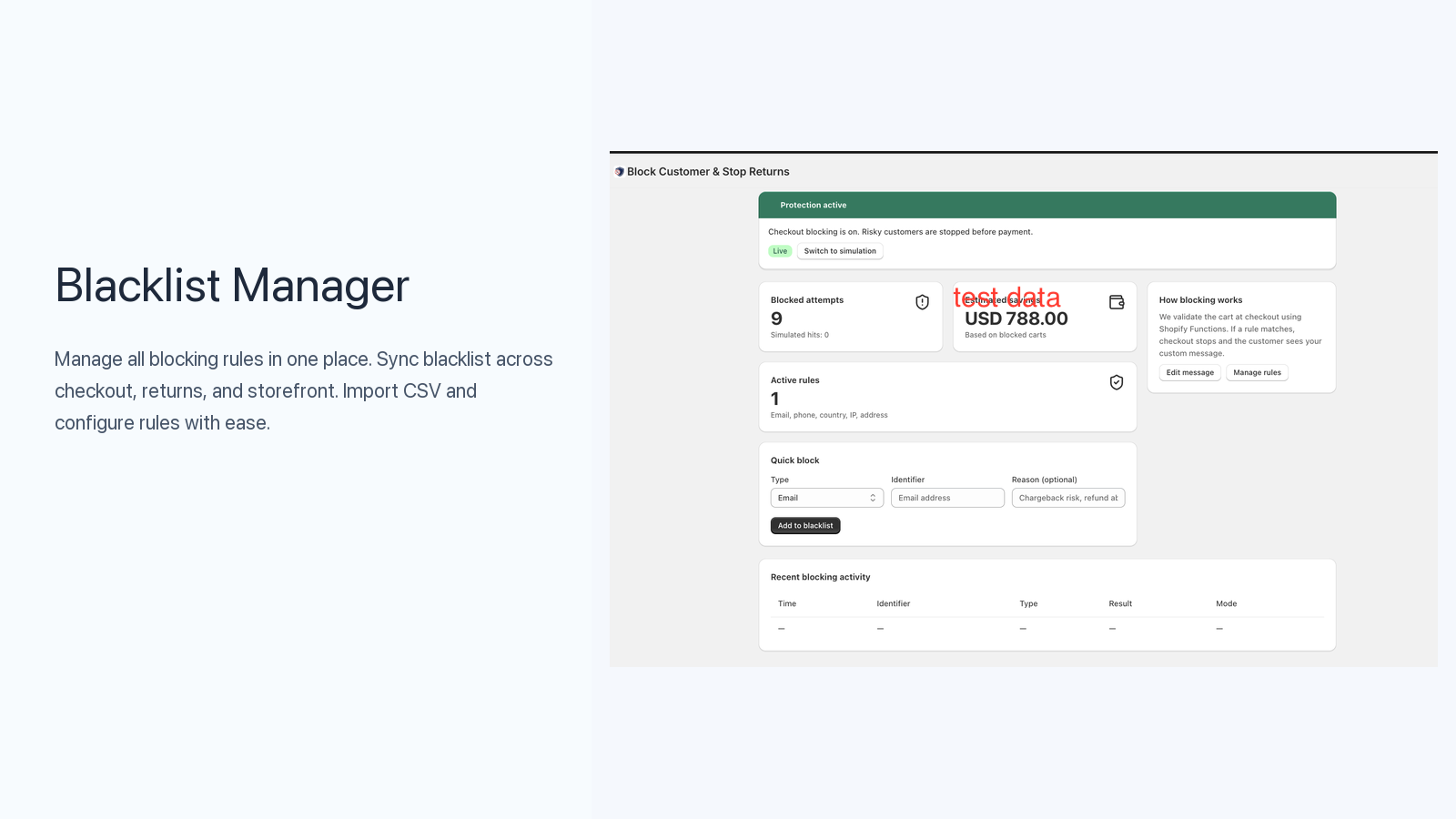
Block Customer & Stop Returns uses merchant defined rules to decide whether a risky checkout should continue. The goal is not to make the checkout harsh. The goal is to protect the store from repeated, confirmed patterns.
RULE 01
The rule check happens where it matters: before the order becomes another operational cost.
RULE 02
Match email, phone, name, address, country, or IP based on the evidence your team has.
RULE 03
Each rule should have a clear reason so support can review it later.
A careful checkout rule protects revenue without punishing normal customers.
Start with the buyer detail you can verify, such as email, phone, name, address, country, or IP. Keep a short note for your team so every rule has a clear reason.
Add the rule in Block Customer & Stop Returns and choose whether it should block or allow. A narrow rule is easier to review than a broad rule that stops good buyers.
Run a safe test order or preview the storefront flow. The goal is simple: a known risky buyer should not reach a paid order.
Check matched rules, order context, and customer signals. Remove old rules when the risk has passed or when a legitimate buyer needs access again.
Both have a place. Known repeat risk belongs earlier in the flow.
Native tools can flag risk or help with order review after the buyer reaches the store flow.
Block Customer & Stop Returns turns known risk signals into a checkout blocking rule.
Good for general fraud review, payment checks, and internal merchant judgment.
Good for repeat return abuse, known bad customers, fake order attempts, and policy based blocks.
Rules may depend on plan, payment method, eligibility, or manual review steps.
Rules can match buyer details such as email, phone, name, address, country, and IP.
Proof and limits
Do not use checkout blocking as a blunt traffic filter. It should be used for known risk, return abuse, order abuse, fraud history, compliance limits, or operational restrictions that your team can justify.
Short answers for merchants comparing blocking, fraud prevention, and Shopify checkout rules.
Yes, if you create a rule that matches that customer's verified detail.
Good customers should not match a precise rule. That is why narrow signals and allow rules matter.
No. Checkout blocking is about order completion. Product or page rules are a separate storefront control.
Yes. Test with safe buyer details and review the result before relying on the rule.
Guide
A direct answer for merchants who need to stop a known buyer from placing another order.
Solution
A practical fraud control page for stores that already know which buyers, locations, or order patterns keep causing trouble.
Feature
A feature page for turning repeat buyer risk into a maintainable blacklist.
Install Block Customer & Stop Returns and add precise checkout blocking to your store.