
CHECK 1
Turn repeated clues into rules
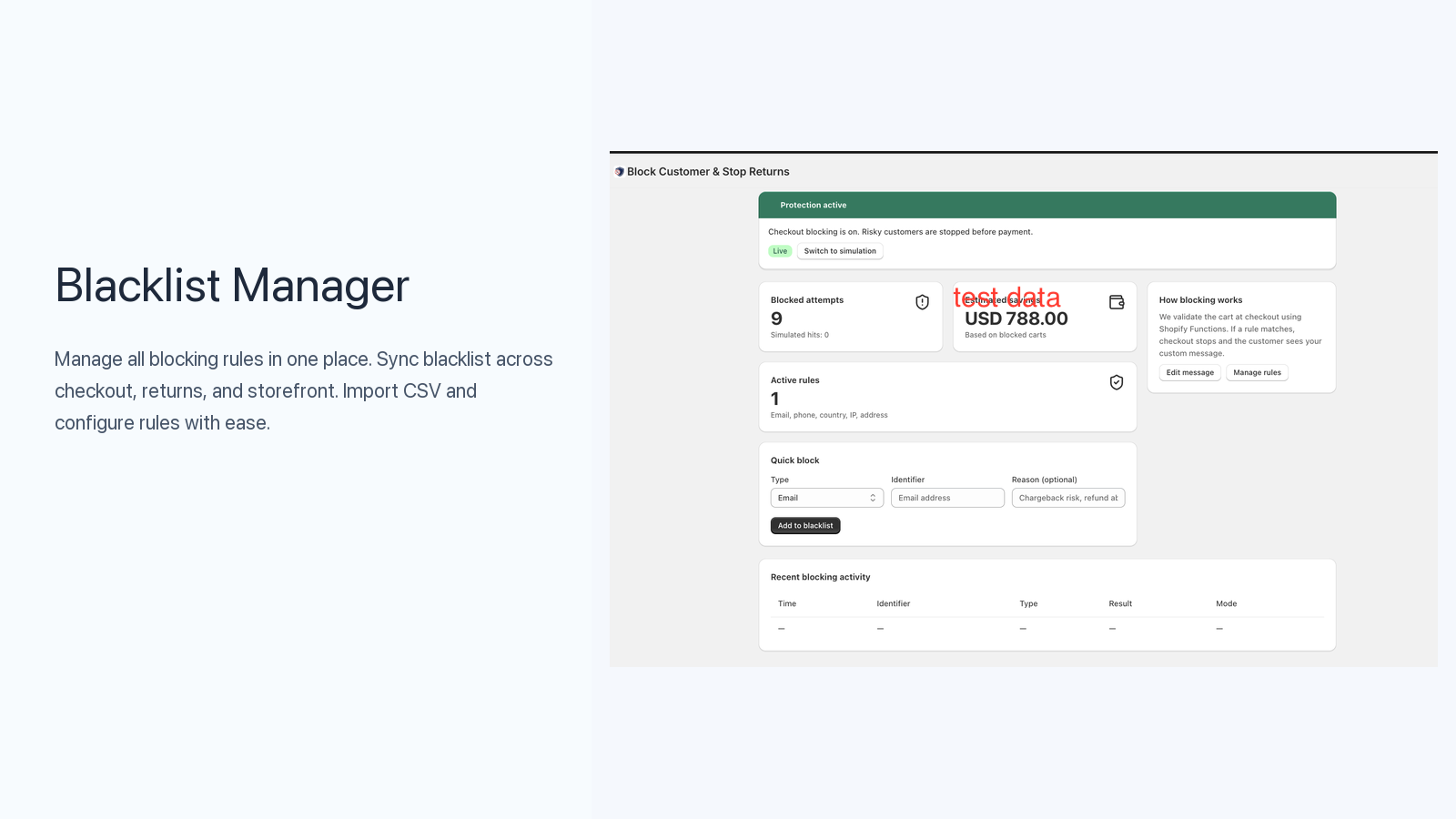
To stop fake orders shopify teams should collect the email, phone, address, country, or IP that keeps returning. Then a checkout rule can stop fake orders shopify stores have already identified.
To stop fake orders Shopify merchants need to separate unknown risk from known repeat patterns. New fraud still needs review. Known fake order signals should be turned into checkout rules so the same pattern cannot keep costing the store time.
Merchant need
Fake orders often repeat a detail: the same phone, the same shipping address, a similar email, a known country pattern, or a repeat IP. If those clues stay in a support note, the checkout flow may never see them.
Look for repeated buyer details.
Block confirmed signals before payment.
Keep fraud review for cases you have not seen before.
Use stop fake orders shopify work as a pattern review. If you wonder why is my shopify store getting spam purchases, look for repeated buyer details before adding any broad block.
CHECK 1
To stop fake orders shopify teams should collect the email, phone, address, country, or IP that keeps returning. Then a checkout rule can stop fake orders shopify stores have already identified.
CHECK 2
If the team asks what do i do about fraud on my shopify site, separate one-off suspicious orders from repeat patterns. Use shopify prevent fraud checks for new risk and rules for known repeats.
CHECK 3
A good stop fake orders shopify workflow starts narrow, tests checkout, and reviews logs. Use stop fake orders shopify rules only when the pattern is clear enough to explain.
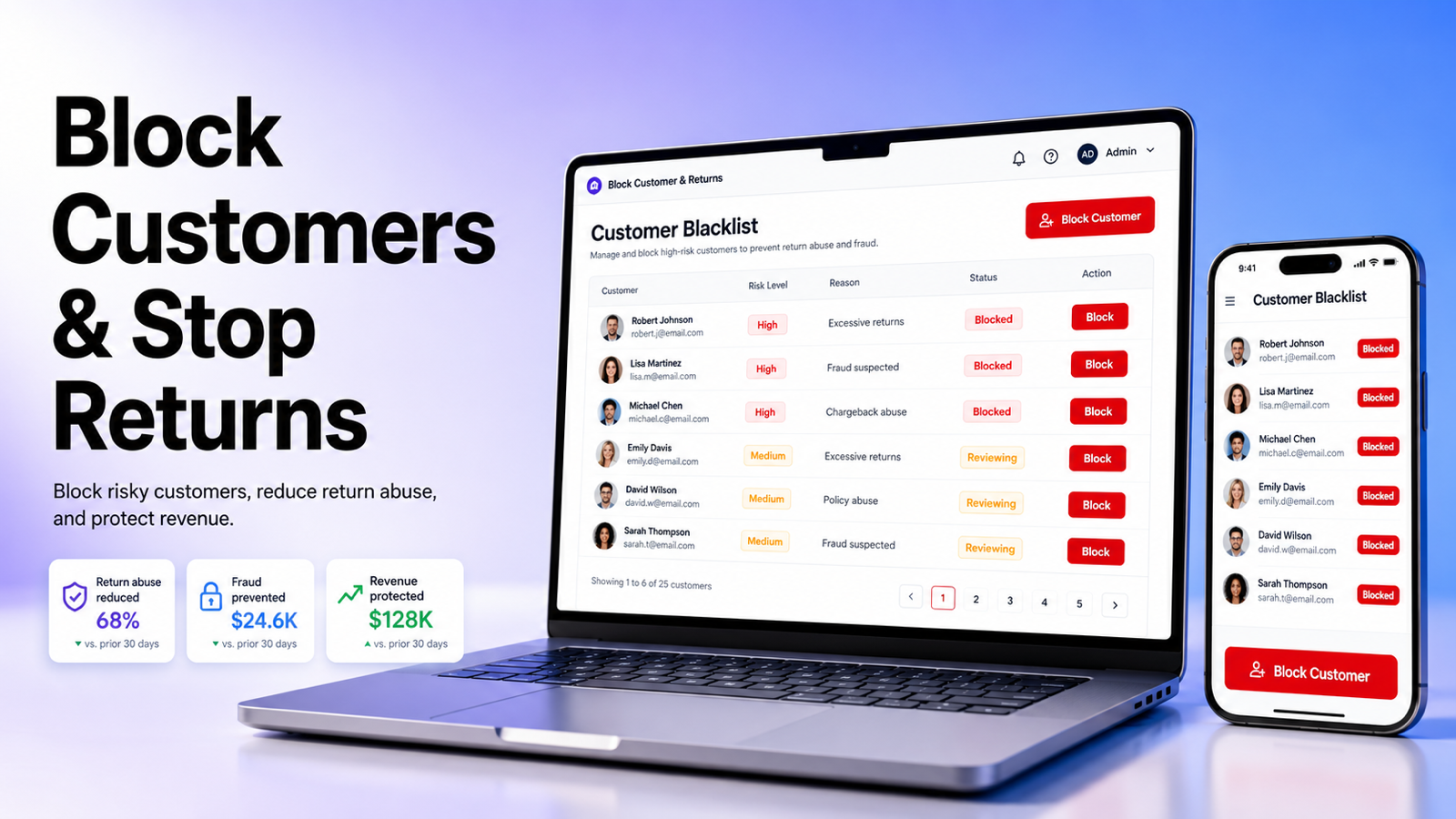
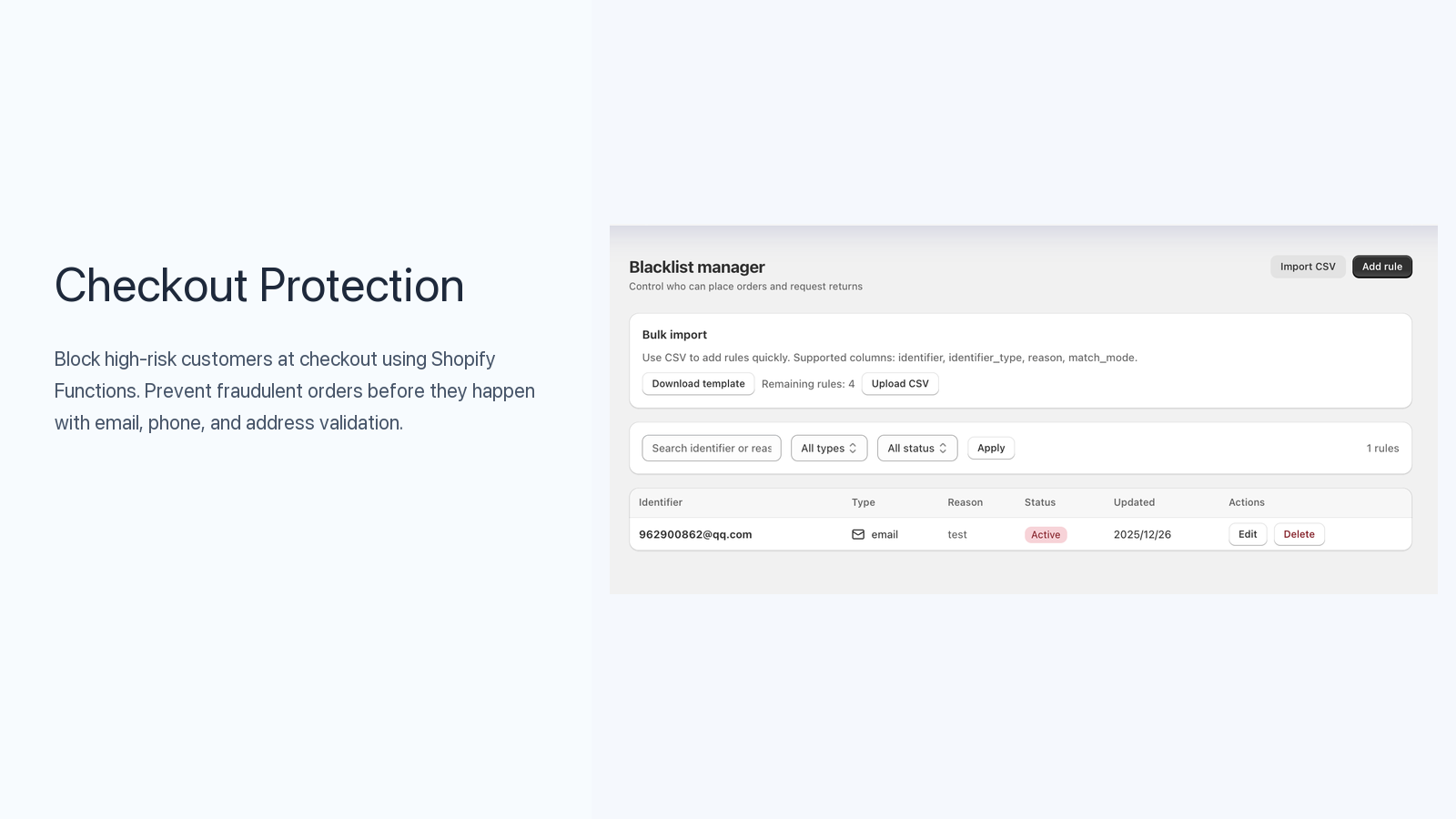
Block Customer & Stop Returns helps store owners move from cleanup to prevention. Add a rule for the signal, test it, and review matched attempts after the rule goes live.
RULE 01
Use email, phone, name, or address when fake buyers reuse details.
RULE 02
Use IP only when it is tied to a clear abuse pattern.
RULE 03
Use country or address rules when the store has a documented reason.
The goal is not to panic. The goal is to move the known signal into a rule.
Start with the buyer detail you can verify, such as email, phone, name, address, country, or IP. Keep a short note for your team so every rule has a clear reason.
Add the rule in Block Customer & Stop Returns and choose whether it should block or allow. A narrow rule is easier to review than a broad rule that stops good buyers.
Run a safe test order or preview the storefront flow. The goal is simple: a known risky buyer should not reach a paid order.
Check matched rules, order context, and customer signals. Remove old rules when the risk has passed or when a legitimate buyer needs access again.
Canceling fake orders still takes work. Blocking known fake order patterns saves that work earlier.
Native tools can flag risk or help with order review after the buyer reaches the store flow.
Block Customer & Stop Returns turns known risk signals into a checkout blocking rule.
Good for general fraud review, payment checks, and internal merchant judgment.
Good for repeat return abuse, known bad customers, fake order attempts, and policy based blocks.
Rules may depend on plan, payment method, eligibility, or manual review steps.
Rules can match buyer details such as email, phone, name, address, country, and IP.
Proof and limits
A rule that blocks one good buyer can create support cost. Review logs, use allow rules, and start with exact signals. Fake order prevention works best when your team treats the rule list as a living store policy.
Short answers for merchants comparing blocking, fraud prevention, and Shopify checkout rules.
Common causes include card testing, bots, fake accounts, and repeat bad buyers. Check for repeated contact, address, IP, and country patterns.
Yes, when the fake order matches a rule that checkout can evaluate.
Cancel unknown one off orders when needed. Block repeat known patterns so they do not create more cleanup.
They can use new emails. That is why phone, address, country, IP, and name signals may also matter.
Solution
A practical fraud control page for stores that already know which buyers, locations, or order patterns keep causing trouble.
Feature
A feature page for turning repeat buyer risk into a maintainable blacklist.
Solution
A buyer level fraud filter for merchants who want rules, logs, and checkout level action.
Install Block Customer & Stop Returns and move known spam purchase signals into checkout rules.