CHECK 1
Focus on repeat exposure
A free chargeback app shopify search may lead to many tools, but shopify chargeback prevention starts with repeat details. Stop the next risky order when the same signal returns.
Shopify chargeback prevention is not one button. It is a workflow that starts before the order and continues through support records, fulfillment proof, return policy, and checkout rules for buyers who have already shown a risky pattern.
Merchant need
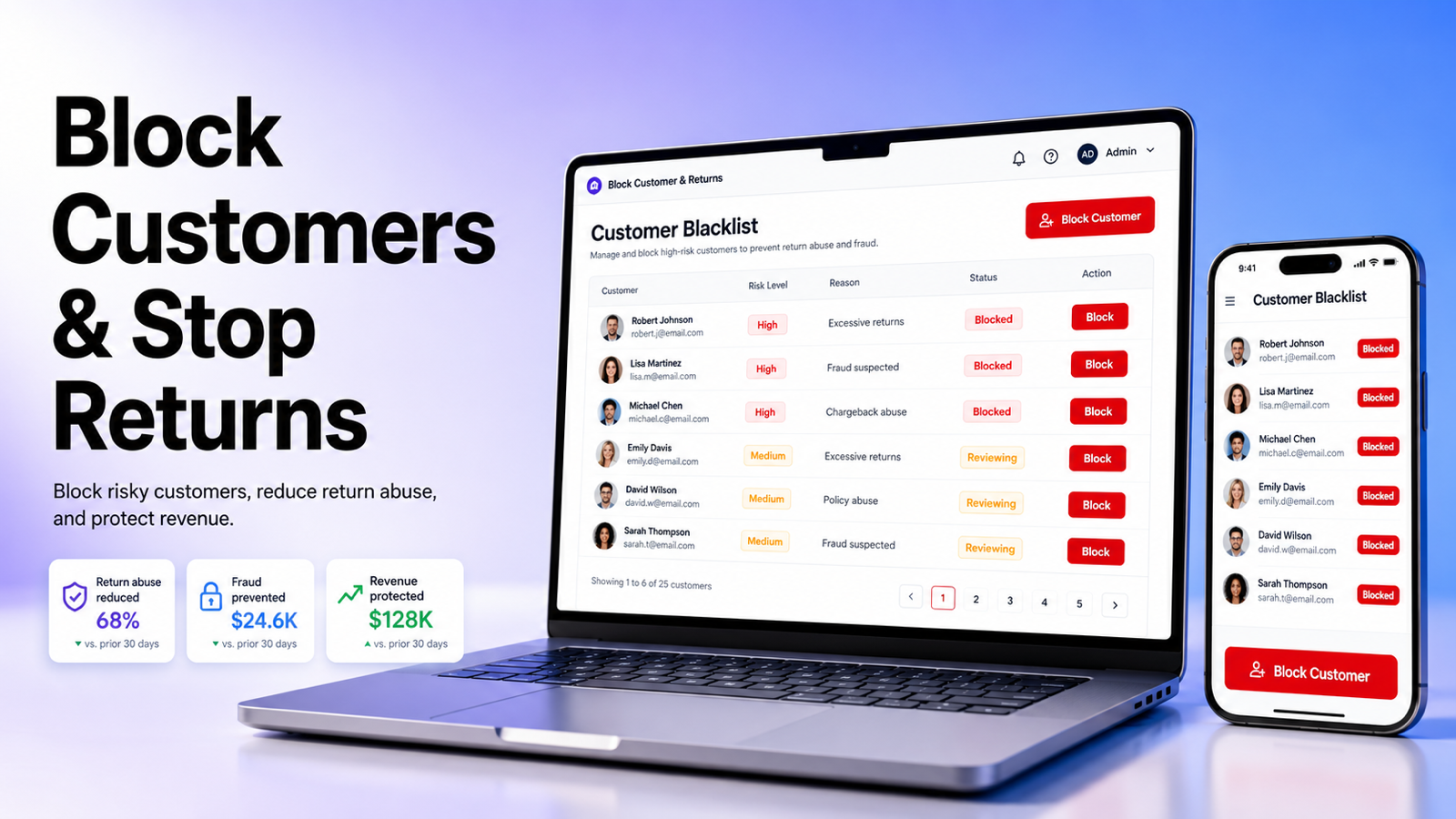
A single chargeback can happen for many reasons. Repeat chargebacks from the same buyer detail are different. Once the pattern is clear, the store needs a way to stop the next order before it adds more dispute work.
Keep evidence for each risky order.
Block confirmed repeat signals before checkout completion.
Use logs so your support and finance teams share context.
Shopify chargeback prevention works best when evidence turns into action. A shopify chargeback prevention workflow should document the order history, buyer signal, and support context before a block is created.
CHECK 1
A free chargeback app shopify search may lead to many tools, but shopify chargeback prevention starts with repeat details. Stop the next risky order when the same signal returns.
CHECK 2
Shopify fraud prevention and chargeback work often share the same buyer evidence. Use shopify chargeback prevention rules for confirmed repeat signals, not for vague suspicion.
CHECK 3
Merchants compare fraud protect shopify cost because disputes are expensive. Shopify chargeback prevention cannot remove all risk, but checkout rules reduce repeat exposure from known buyers.
CHECK 4
Every shopify chargeback prevention rule should have a short reason, proof reference, and review date so the team can defend the decision.
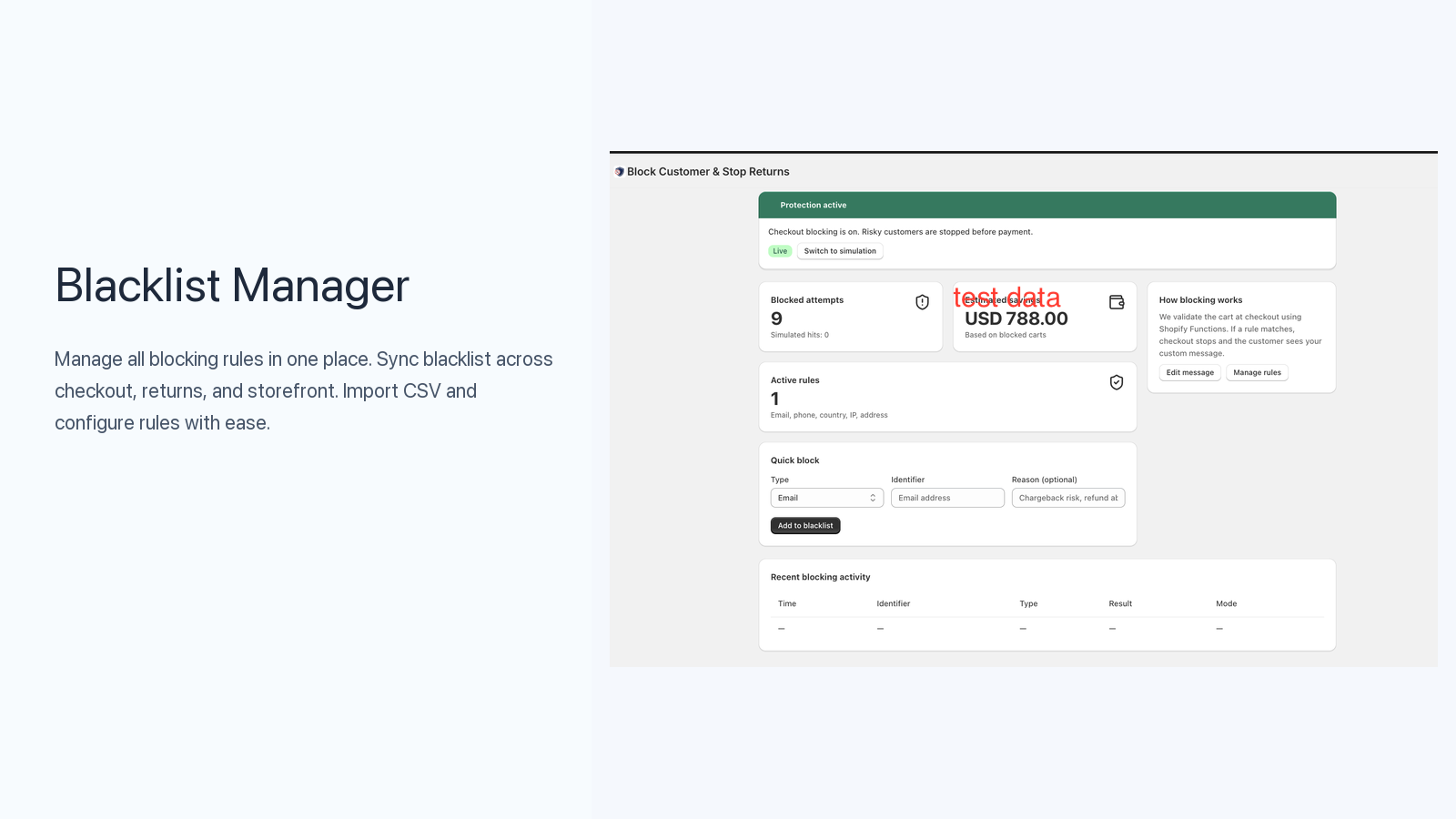
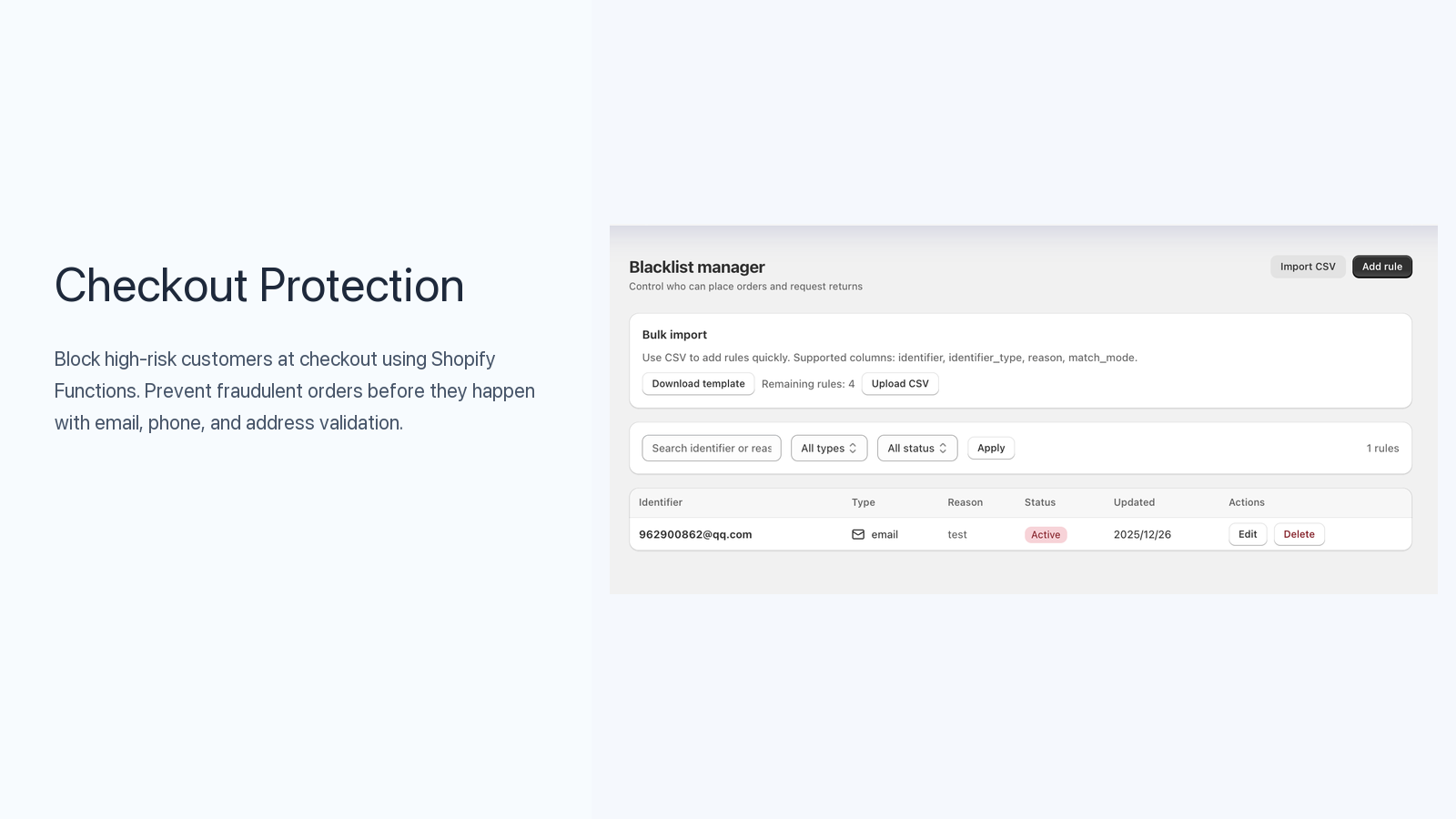
Block Customer & Stop Returns does not fight chargebacks for you. It helps reduce repeat exposure by stopping known risky buyers from creating another paid order when a rule matches.
RULE 01
Move confirmed repeat signals into checkout rules after internal review.
RULE 02
Chargebacks and abusive returns often share buyer details that can be matched.
RULE 03
Use reasons and logs so your team understands why the rule exists.
Make the rule narrow enough to protect the store without blocking normal buyers.
Start with the buyer detail you can verify, such as email, phone, name, address, country, or IP. Keep a short note for your team so every rule has a clear reason.
Add the rule in Block Customer & Stop Returns and choose whether it should block or allow. A narrow rule is easier to review than a broad rule that stops good buyers.
Run a safe test order or preview the storefront flow. The goal is simple: a known risky buyer should not reach a paid order.
Check matched rules, order context, and customer signals. Remove old rules when the risk has passed or when a legitimate buyer needs access again.
Dispute response matters. But known repeat signals should be stopped before another order is paid.
Native tools can flag risk or help with order review after the buyer reaches the store flow.
Block Customer & Stop Returns turns known risk signals into a checkout blocking rule.
Good for general fraud review, payment checks, and internal merchant judgment.
Good for repeat return abuse, known bad customers, fake order attempts, and policy based blocks.
Rules may depend on plan, payment method, eligibility, or manual review steps.
Rules can match buyer details such as email, phone, name, address, country, and IP.
Proof and limits
Keep the order number, customer detail, dispute reason, support notes, and any return history. This gives the rule a business reason and keeps the list from becoming emotional or arbitrary.
Short answers for merchants comparing blocking, fraud prevention, and Shopify checkout rules.
No. It can help stop repeat known risk. New buyers and payment disputes still need normal prevention and evidence workflows.
Use the most reliable repeated detail, usually email, phone, or address.
That depends on your policy and evidence. The app should enforce your policy, not replace your judgment.
Yes. Disable or remove a rule if the risk no longer applies.
Solution
A practical fraud control page for stores that already know which buyers, locations, or order patterns keep causing trouble.
Guide
A direct answer for merchants who need to stop a known buyer from placing another order.
Guide
A plain guide for merchants dealing with fake orders, spam purchases, and repeat abuse.
Use Block Customer & Stop Returns to block confirmed repeat buyer signals before checkout.