CHECK 1
Use the native layer honestly
Shopify Protect is useful where its eligibility and purpose fit. For shopify fraud protection questions, keep Shopify Protect in the native risk layer and avoid claiming that any app replaces it.
Shopify Protect can be part of a merchant fraud stack, but it is not the same thing as checkout blocking. If you have a known abusive buyer, a repeat return pattern, or a specific address that should not order again, you may need a rule that stops the next checkout.
Merchant need
Merchants comparing Shopify Protect often want reassurance. They want to know if native protection is enough for their store. The honest answer is that protection, fraud review, and customer blocking are different layers.
Use native tools for general risk handling.
Use checkout blocking for confirmed repeat signals.
Do not frame one tool as a magic replacement for the other.
Shopify Protect should be understood as one layer in a larger fraud workflow. Shopify Protect can support eligible platform protection, while checkout blocking handles known repeat buyer signals that your store already identified.
CHECK 1
Shopify Protect is useful where its eligibility and purpose fit. For shopify fraud protection questions, keep Shopify Protect in the native risk layer and avoid claiming that any app replaces it.
CHECK 2
Shopify Protect is not the same as a custom block list. If your team needs to shopify prevent fraud from one repeated address, phone, or IP, a checkout rule handles that narrower job.
CHECK 3
Some merchants worry about order protection shopify scam claims. The safer answer is clear: Shopify Protect belongs with native protection, and checkout blocking belongs with known repeat risk.
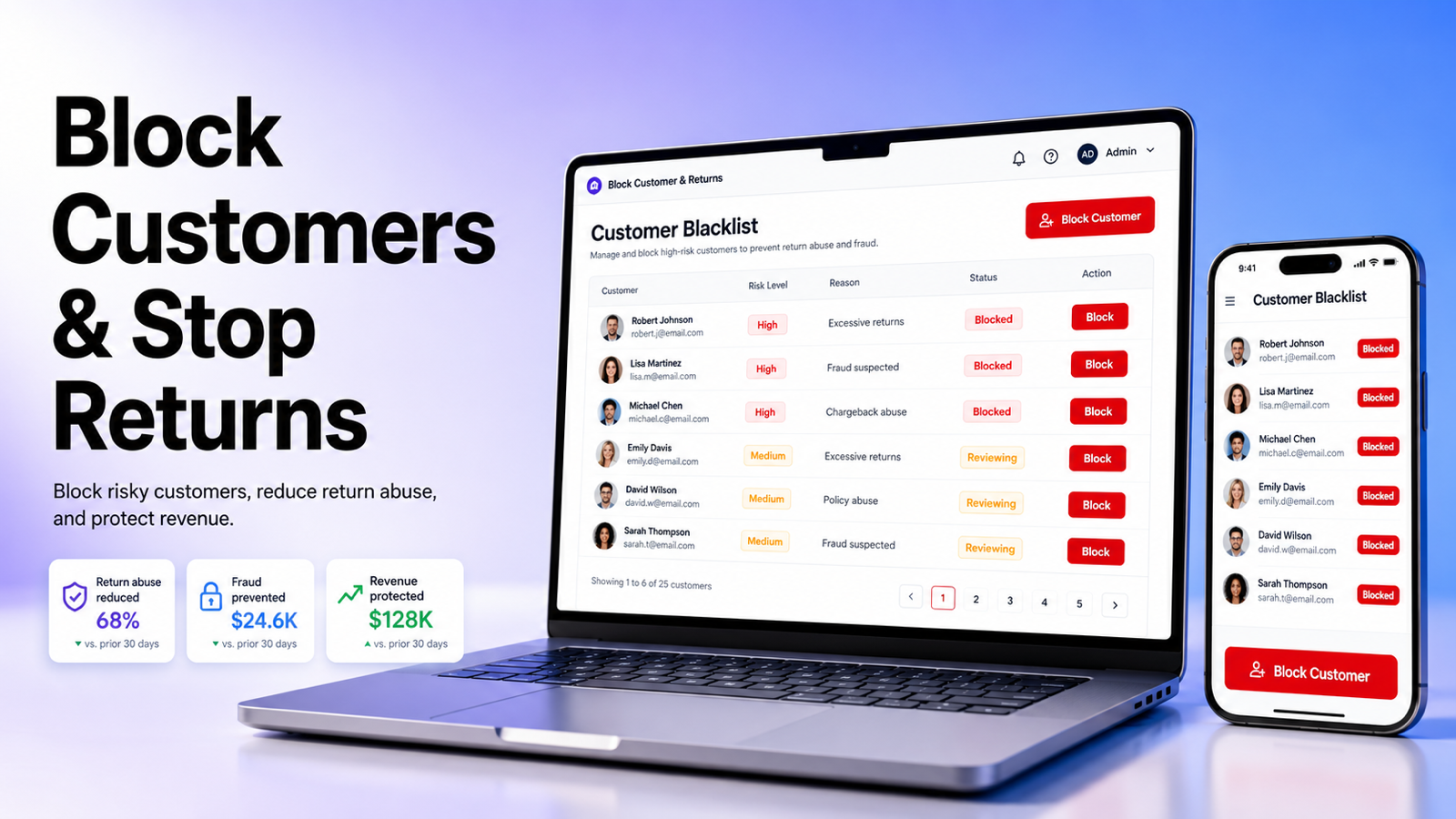
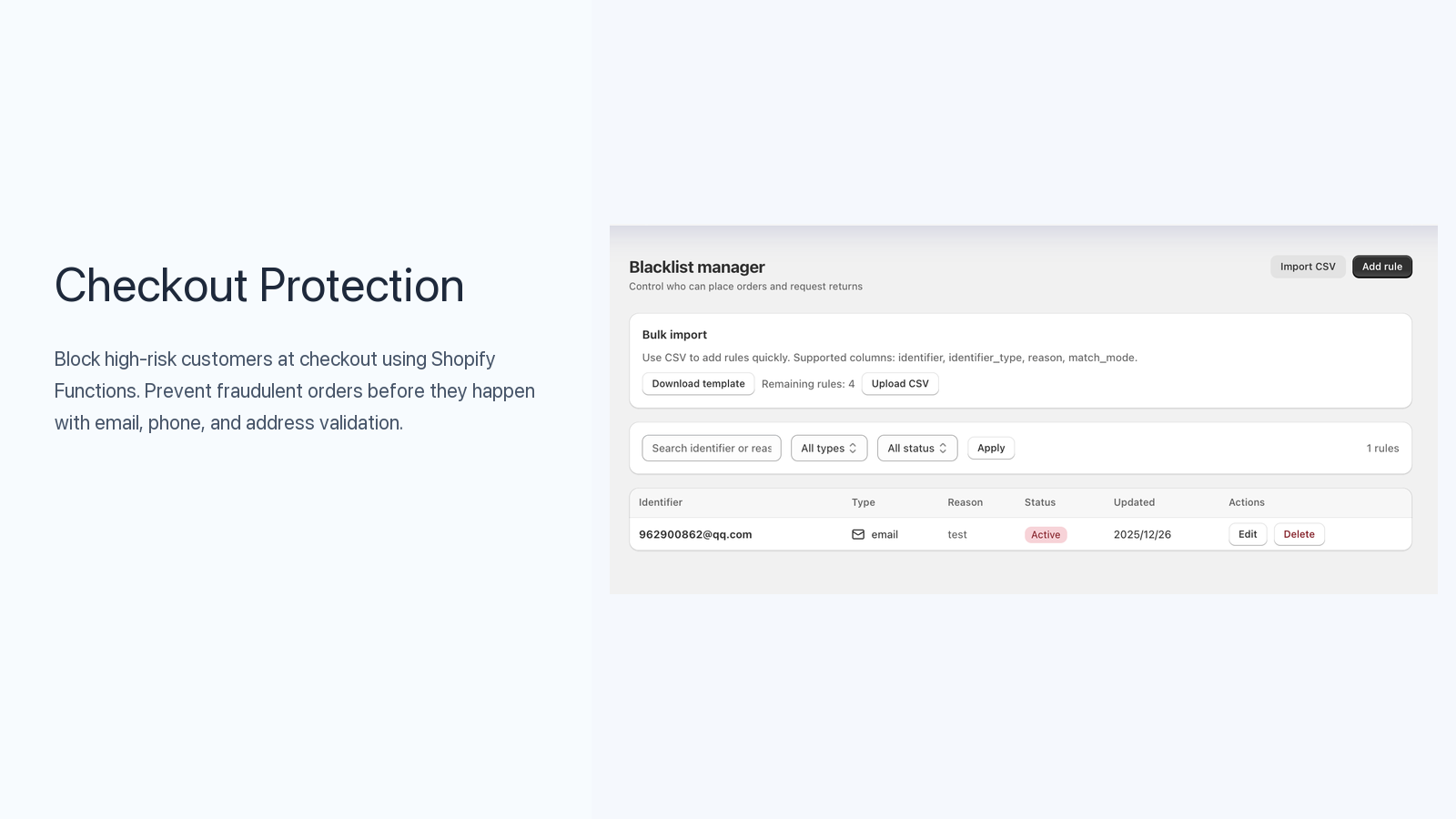
Block Customer & Stop Returns is for merchant controlled rules. It can block a checkout when a buyer detail matches your active rule. That makes it useful when the same risk returns after you already handled the first incident.
RULE 01
Create rules for repeat buyer details instead of waiting for another order review.
RULE 02
Use rules when returns, disputes, or policy abuse keep coming from the same signal.
RULE 03
Add country or IP rules when the reason is operational, legal, or clearly tied to fraud risk.
Keep the comparison simple. Do not replace broad fraud review with narrow blocking rules.
Start with the buyer detail you can verify, such as email, phone, name, address, country, or IP. Keep a short note for your team so every rule has a clear reason.
Add the rule in Block Customer & Stop Returns and choose whether it should block or allow. A narrow rule is easier to review than a broad rule that stops good buyers.
Run a safe test order or preview the storefront flow. The goal is simple: a known risky buyer should not reach a paid order.
Check matched rules, order context, and customer signals. Remove old rules when the risk has passed or when a legitimate buyer needs access again.
This is a control comparison, not a claim that one product replaces the other.
Shopify Protect is a native protection layer for eligible situations inside the Shopify ecosystem.
Block Customer & Stop Returns is a merchant rule layer for blocking known risky buyers.
Works within Shopify native risk and protection context.
Uses merchant supplied signals such as email, phone, address, country, name, and IP.
Often helps with order protection or risk handling after normal platform checks.
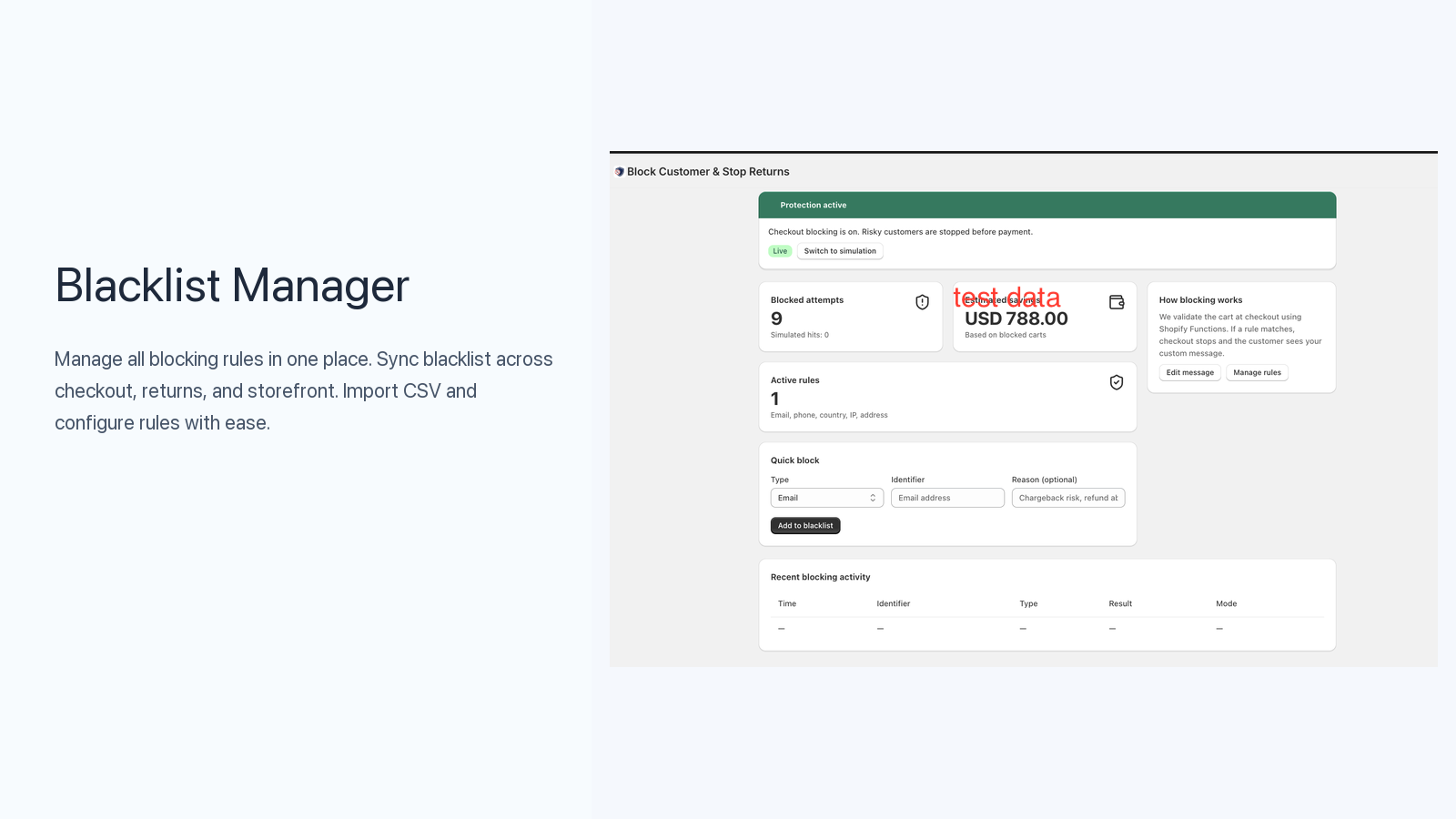
Acts before checkout completion when an active rule matches.
Proof and limits
A good comparison page should be useful, not aggressive. Shopify native fraud tools help many merchants. Block Customer & Stop Returns helps with a narrower job: stop known repeat risk before it becomes another order.
This page is not affiliated with Shopify Protect. Shopify and Shopify Protect are Shopify terms used for comparison and merchant education.
Short answers for merchants comparing blocking, fraud prevention, and Shopify checkout rules.
No. It is a checkout blocking layer for known risk. Shopify Protect is a native Shopify feature with its own eligibility and purpose.
Add it when your team can name the buyer signal that should not be allowed to order again.
Yes. Many stores should keep native fraud tools and add blocking for repeat patterns.
Yes, but use those rules carefully and only for clear business, compliance, or fraud reasons.
Solution
A practical fraud control page for stores that already know which buyers, locations, or order patterns keep causing trouble.
Solution
A buyer level fraud filter for merchants who want rules, logs, and checkout level action.
Feature
A feature page for merchants who need checkout action, not just internal notes.
Use Block Customer & Stop Returns alongside your existing Shopify fraud workflow.